THE NARRATIVE
The Official Narrative
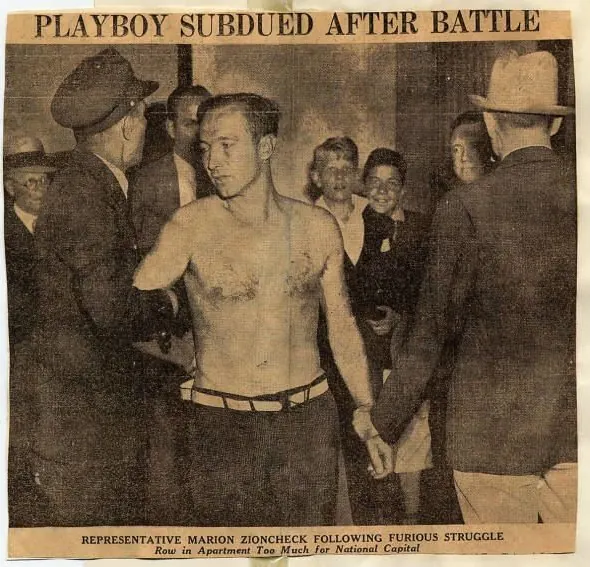
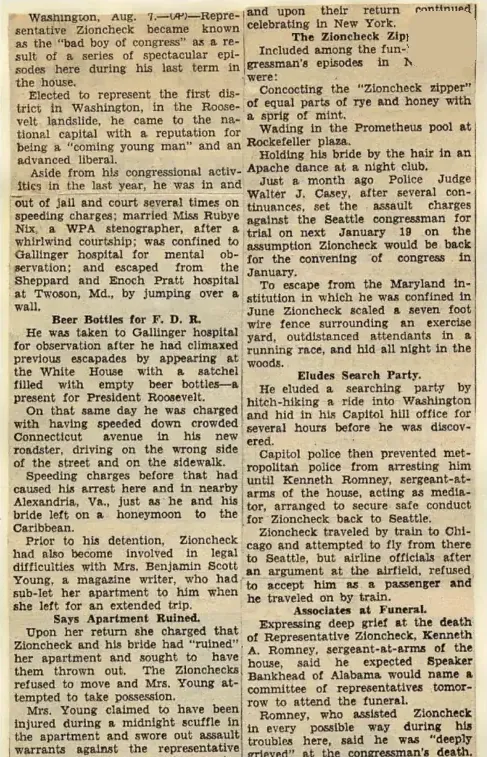
In Congress, Marion A. Zioncheck was remembered chiefly as a fierce backer of Franklin D. Roosevelt’s New Deal. That legislative work, according to the familiar public story, was repeatedly eclipsed by personal spectacles the press catalogued — fountain dancing, a car driven onto the White House grounds, and other episodes that critics and headlines used to define him. Under that pressure, the same account says, he grew depressed and announced he would not run again in 1936.
Interior Secretary Harold L. Ickes later wrote that on April 30, 1936, Zioncheck asked him to perform a wedding with fiancée Rubye Louise Nix; Ickes declined. The couple married in Annapolis, Maryland, and honeymooned in San Juan, Puerto Rico. On August 1, friend and ally Warren Magnuson — taking Zioncheck’s retirement talk at face value — filed to seek the House seat. Wire services, the same public story continues, treated Zioncheck’s behavior as national comedy.
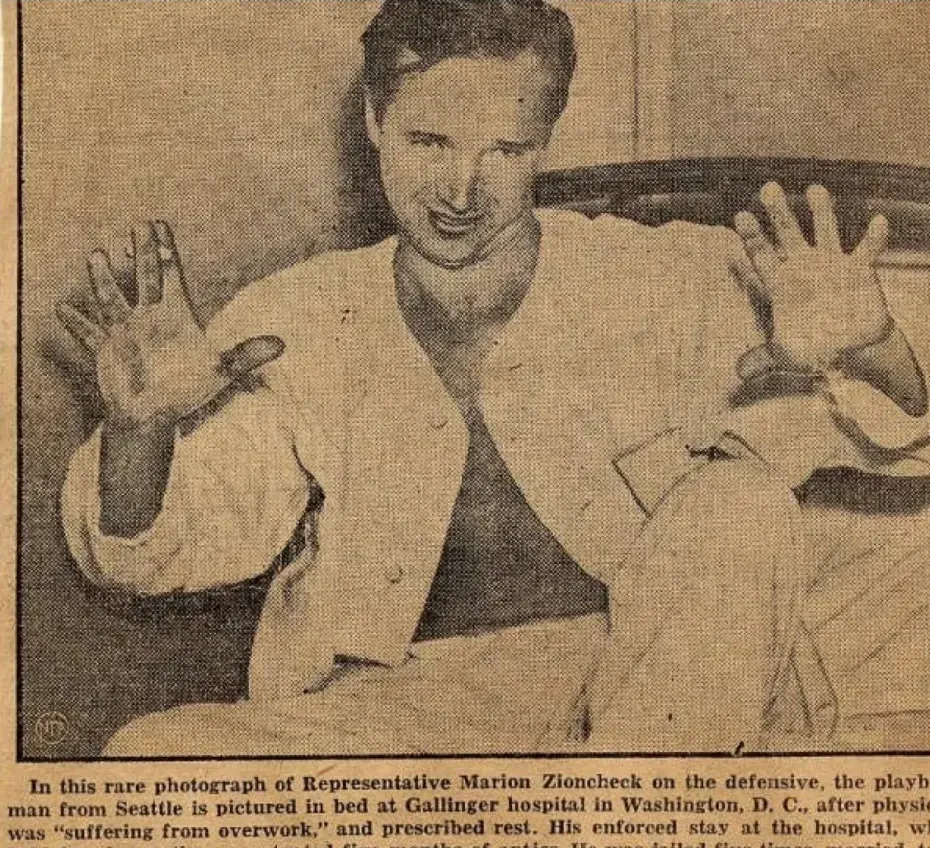
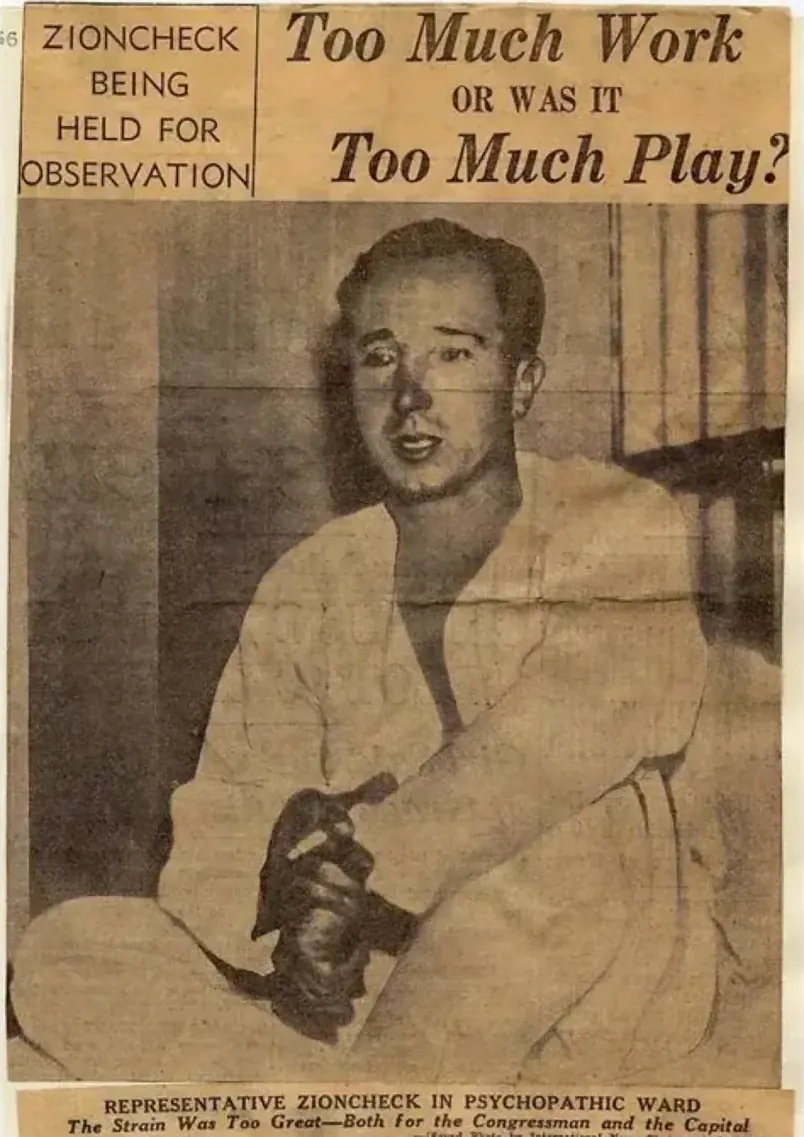
On May 30, 1936, after a party quarrel, Rubye left him. On June 1 he searched Washington for her, was arrested on a lunacy warrant, and was held in Gallinger Municipal Hospital’s psychopathic ward; Rubye returned to him there. Physicians blamed overwork and a frantic pace. Moved to a private hospital in Towson, Maryland, he escaped, returned to Washington, and claimed congressional immunity.
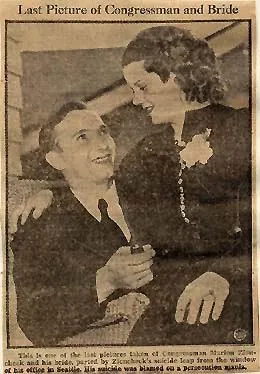
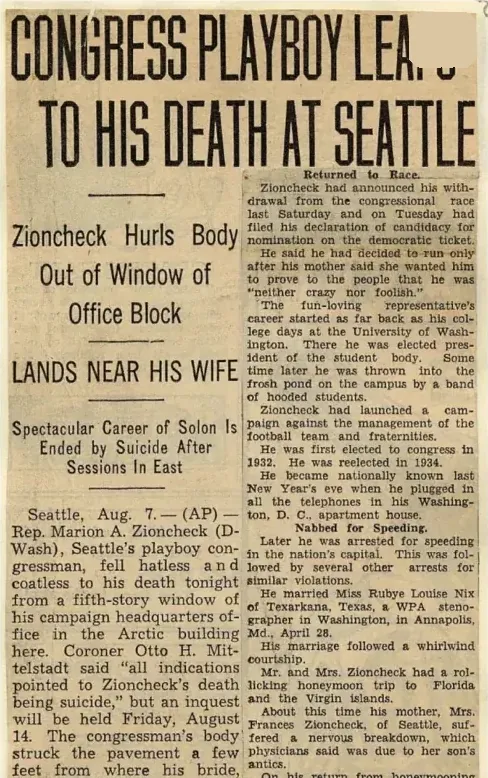
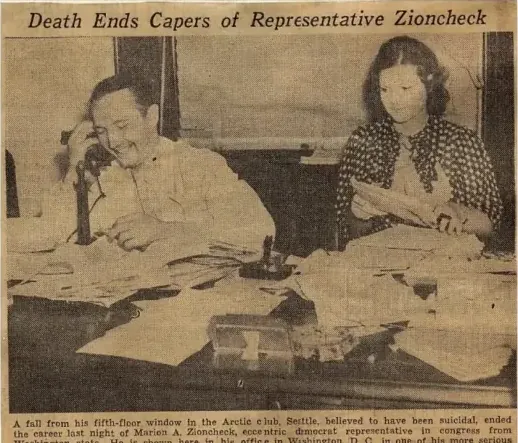
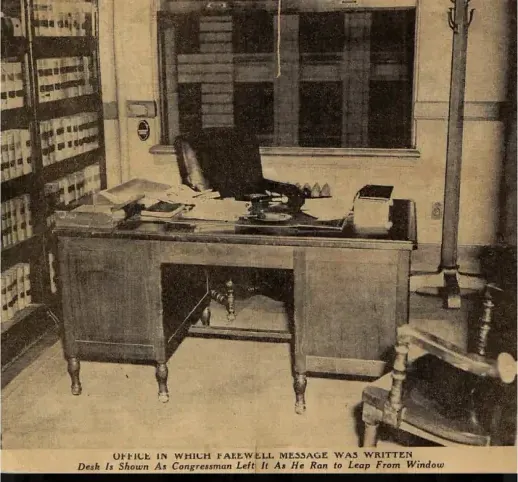
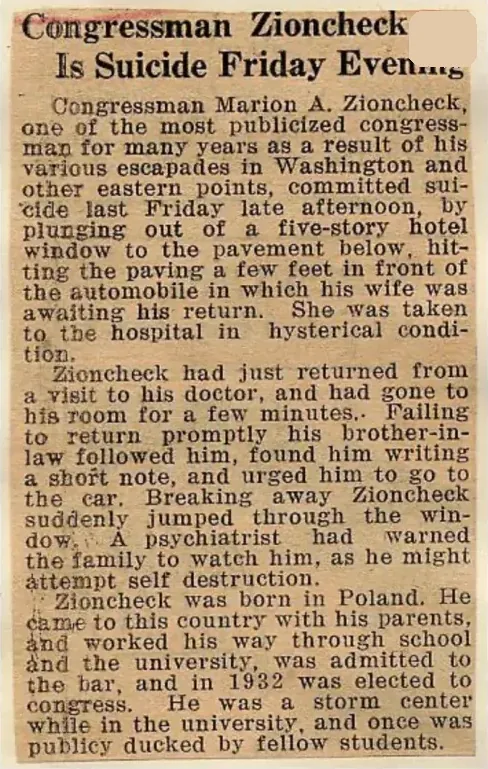
On August 7, 1936, the official and contemporary press account holds that Zioncheck died by jumping from a fifth-floor window of his Arctic Building office at Third Avenue and Cherry Street in Seattle. He struck the sidewalk in front of a car occupied by his wife. A note found with him, as printed in that account, said his only hope had been to improve an unfair economic system that held no promise of a decent chance to survive, let alone live. Another widely reprinted farewell version spoke of finished work and distant goals. University of Washington and Boeing, the same memorial story records, closed for part of a day; he was buried at Evergreen Washelli Memorial Park in Seattle. Rubye later became known as an artist whose work appeared in major venues including the Museum of Modern Art and the Kennedy Center.
Source framing: public encyclopedia and contemporary press account of August 1936, restated here without investigative rebuttal.